Experiment 7
Artibonite valley, Haiti — April 2, 1984
1. Context
Between March 1983 and April 1984 I studied three powders obtained in the Artibonite valley, designated here as samples A, B and C (see Field Notes, March 22, 1983). Their composition is not published on this site, for the reasons given on The Narcisse Case page. Experiments 1 to 6 concerned samples A and B and are not reported here. Experiment 7 is the only trial made with sample C on an animal subject, and the only one of which a recording was kept.
2. Origin of sample C
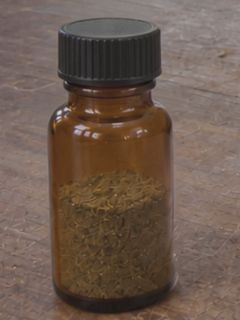
Sample C was obtained on March 22, 1983, in a village in the hills above the Artibonite valley, through two intermediaries. Unlike samples A and B, which were mixtures, it was described to me as being made from a single plant.
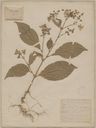
The plant is known locally as fèy dòmi, "the sleeping leaf". I was shown a branch of it, which I pressed the same evening (specimen DRA-83-114). It was sterile, without flowers or fruit, and I was never able to identify it with certainty, even after comparing it with the collections of two herbaria. I can only say that it is a shrub with opposite leaves, and that it is not one of the plants usually cited in the literature on the subject.
According to the people who agreed to speak to me, this powder is not a remedy and is never sold in the market. It is not part of the ordinary practice of Vodou. The houngan I consulted (see Photographs) refused to prepare it, or even to name the person who did. He described it as the work of a bokor, a practitioner who, in his words, "serves with both hands". The powder is said to be used against a person who has seriously broken the rules of the community: it is placed on the threshold of the house, or on the person's skin, and the person "goes to sleep".
I report these statements as they were made to me. I have no way of verifying them.
3. Materials
Subject: one adult housefly (Musca domestica), found motionless on a windowsill of the guesthouse on the morning of the experiment.
Sample: sample C, a dry, finely ground plant powder, greenish-brown, stored in a stoppered amber vial since March 22, 1983.
Instruments: stainless steel micro-spatula, latex gloves, hand lens (×10), sheet of white paper, pocket thermometer.
Recording: VHS video camera on a tripod, macro setting, date stamp on.
Conditions: room temperature 27 °C, daylight, no draught.
4. Method
- Before the trial, the subject was observed for 30 minutes. No movement of the legs, the wings or the abdomen was seen under the hand lens. No response to touch with the spatula. The subject was considered dead.
- The subject was placed on its back on the sheet of paper. Recording started.
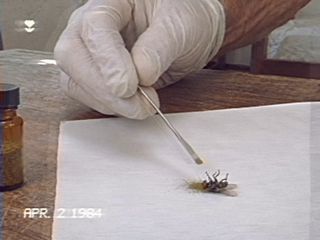
- Approximately 2 mg of sample C were deposited on and beside the subject with the micro-spatula. The hand was then withdrawn from the field.
- The subject was observed without any further intervention until the end of the recording.
5. Observations
| 0 s | deposit of the sample. |
| about 6 s | first movement of the legs. |
| about 9 s | sustained movements of the legs and the wings; the subject attempts to turn over. |
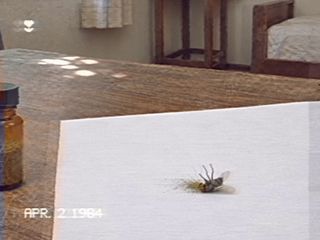
| about 12 s | the subject turns over and stands on its six legs. |
The subject remained standing until the end of the recording. It flew away about two minutes later, out of the field of the camera.
Frames from the recording
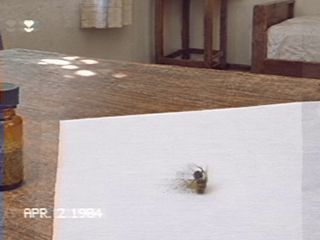
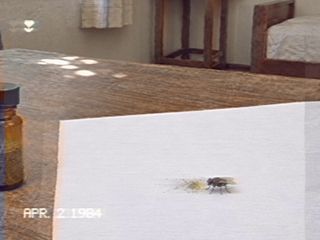
6. Discussion
Three explanations must be considered.
- The subject was not dead but in a state of deep torpor, and the handling or the warmth of the paper revived it. This is the most economical explanation. It does not explain why no movement at all had been observed during the thirty minutes before the trial.
- Sample C contains a substance acting by contact on a severely depressed nervous system. Nothing in my analyses of 1983 supports this hypothesis.
- Neither of the above.
The trial has serious limitations: a single subject, no control subject, and an unknown time of death.
7. Conclusion
No conclusion can be drawn from a single trial. I report this observation because it was recorded, and because it has never been explained. The experiment was not repeated. The remaining quantity of sample C was destroyed in 1986.